Chris Barker and Bessie Moore first met while attending a training course for the Postal Office in southeast London. Upon completion of the course, they had developed a chaste relationship and began drafting letters to one another discussing politics and their hopes and dreams for the future. With World War II already occurring for three years, Chris became a soldier with the Royal Corps of Signals and was deployed to Libya. A year later, Chris decided to mail a letter communicating his love and feelings for Bessie, who at the time was seeing another man. The letter was received enthusiastically by her, and she spent many weeks writing a response which would change the trajectory of their lives forever. Their love letters spanned the next three years and more than 500 survived, capturing Chris’ unrelenting romance for Bessie. The letters eventually led to their marriage which lasted 58 years. Many of Chris’ letters contain references to different flowers. In the “My Dear Bessie Letters”, Chris uses nature through the Romantic ideas of William Wordsworth to equate his love for Bessie.
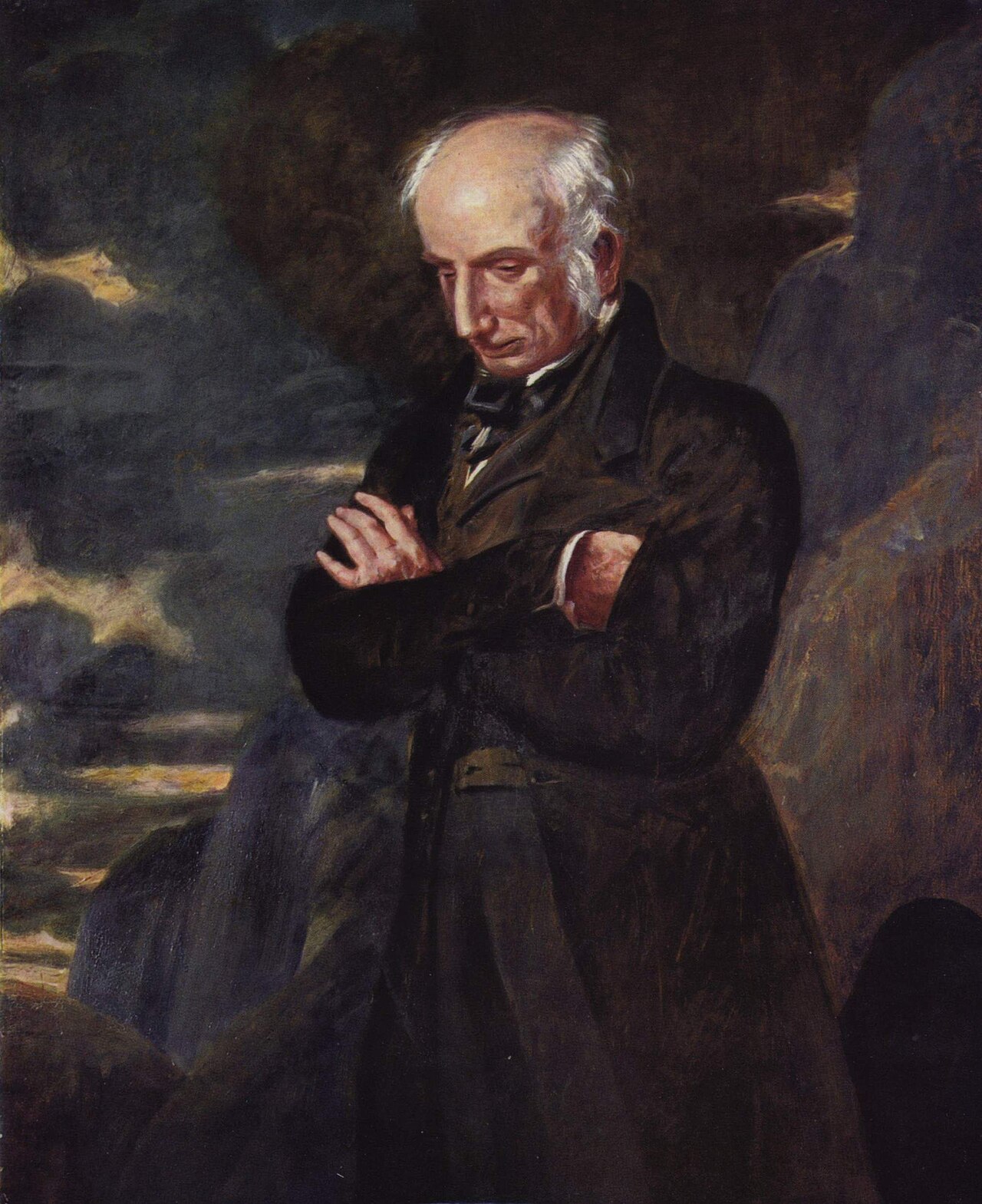
The Romantic period began in the late 18th century as a response to the social and political norms of the Age of Enlightenment and as a reaction to the Industrial Revolution. The period brought profound change to the European world through literature, arts, and thought. Prominent English poets like William Wordsworth, Samuel Coleridge, William Blake, and John Keats appropriated poetry as the highest form of art and contributed to the Romantic movement through their writings. Their work shares mutual values, such as the emphasis on emotion and the exaltation of nature. For Wordsworth in particular, nature “was a saving process and a benign Presence” (Bloom and Trilling 7). This outlook on nature coined him the nickname of the “nature poet”.
Firstly, Chris uses nature to connect with Bessie’s beauty and love tangibly. He sees nature as a relatable concept for making comparisons as it always surrounds us. In a letter written in June 1944, Chris uses figurative language to describe her letters. He says that “these letters of yours are just like an English river running through green fields, clear, refreshing, bright, confident. You come rippling down at me, surround me with your beauty and your meaning…” (64). Just like the English river that gives life as it flows through the pastoral landscape, Bessie rejuvenates Chris with love through nature’s beauty and her correspondences. He yearns to be enveloped by her natural presence and uses nature metaphors to substitute her void. We see another example of figurative language in a May 1944 letter, where Chris desires to see Bessie “…in puris naturalibus…to forage around you, to rove over you, to subdue due you, to possess you” (57). Chris uses language of natural possession such as ‘forage’ to secure his love for her in his war-torn environment.
Like Chris’ comparison of Bessie to nature’s beauty, William Wordsworth writes in his Preface to Lyrical Ballads that “he considers man and nature as essentially adapted to each other, and the mind of man as naturally the mirror of the fairest and most interesting qualities of nature” (Reidhead and Johnson 301). He argues that human beings and the natural world are not separate. We are a part of it, and it is a part of us. It is through this connection to nature that Chris’ love for Bessie transcends borders and oceans regardless of their locale’s geography. In Chris’ eyes, the love he finds in Bessie’s letters is the missing puzzle piece that makes living sustainable.
Through this connection with nature, Chris begins to imagine an alternative reality where he begins to subject himself to Bessie. Chris almost wants to fall slave to her. In a letter composed in April 1944, Chris states, “I am your servant and your master at once” (46). Perhaps this means that as a master he is taking charge of their love story but as a servant to Bessie, he views her as a force of nature rather than an object. The power and force Bessie emits from these letters blind Chris from the surrounding environment and bind him to her love. He longs to be consumed by her love letters. Like Chris, Wordsworth views nature as a power and not an object. He believes that nature “shaped his powers of mind and supplied his life” (Blunden 74). Chris continues writing to Bessie stating, “I will command you and be commanded by you”, reaffirming his desire to control the narrative with a different storyline as well as his subservience to her (47). Seeing Bessie this way provides Chris with a sense of grace and responsibility; it is dependent upon him to write so she will respond and comfort.
Chris also uses his imagination as a mode of escapism. This distracts him from the present and offers opportunities to question the future. We see this in a letter from April 1944 where he writes, “…tell me of your clothes. Tell me your room, the furniture, so that I can better imagine you, more easily come to you when you are alone” (52). Asking these questions anchors Chris to a possible reality when there is no war, and he is reunited with Bessie. He demands every possible detail to attain a well-rounded image of his future wife. Similarly, Wordsworth epitomizes this escapist behavior. He would often depart commercialized areas overtaken by the Industrial Revolution for the Lake District to “relieve himself, not so much of himself, as of those exterior circumstances which aggravate and disturb him” (Jochem 18). Surrounding himself in nature would cure his personal struggles and allow him to be closer to his true love: nature. Furthermore, Bessie’s letters aid Chris in envisioning a better future and her descriptions construct a direct portal to her heart.
Chris also uses nature as imagination to deem his relationship with Bessie as fantastical. He tries to cope with his love pragmatically by writing poetic letters but resorts to writing sexually explicit letters. This propels his imagination and fantasies to bloom. In a letter written in March 1944, he describes his fantasies saying, “This is a fever that I have which makes me hot and dispossesses my mental faculties whenever I think of you, which is more and more often” (32). One month later he writes, “how impossible to sleep with thought and wonder of you hot within me” (41)! Whenever Chris thinks of her, he is overcome by an “irrational, illogical, nonsensical” love fever where he places Bessie on a pedestal, just as Wordsworth elevates nature (32). Moreover, Wordsworth characterizes poetry in his Preface to Lyrical Ballads as “the spontaneous overflow of powerful feelings”, comparing love to the natural fantasy of life (303). With every passing letter that he writes, Chris’ fantasy world expands. He begins to lust over her femininity and becomes infatuated with her body. Responding to these feelings, he writes, “as I toss and turn and wriggle and writhe I think of you, probably doing the same…I know that if I think of you, I will not sleep; yet I keep on thinking of you, and get hotter and hotter” (41). Chris’ dreamlike hallucinations show us his love for Bessie is fantastical. Because of the war, his hormones are bottled up and these letters give him a fantastical outlet to release. Writing letters to Bessie where Chris describes her image, releases his sexual desires, fueling his connection with her.
These examples teach us that Chris uses nature through the Romantic ideas of William Wordsworth to equate his love for Bessie. We learn that Chris uses nature to connect with Bessie’s beauty. He uses figurative language to take the place of void and language of natural possession to secure his love for her. Additionally, Wordsworth argues that human beings and the natural world are not separate. Through this connection with nature, we learn that Chris uses his imagination three separate ways. Firstly, he creates an alternative reality where he subjects himself to Bessie. He views her as not an object but a power, which she releases from her letters to secure Chris. Bessie’s letters give Chris a sense of grace. Wordsworth agrees with this idea and believes the power of nature gave him intellect. Secondly, Chris uses imagination as a mode of escapism to distract himself from the present so he can ponder his future. He sends letters demanding her every detail to attain a clear image of his future wife. The details he receives in her letters aid Chris in visualizing a different future. Lastly, Chris uses imagination to create a fantastical relationship with Bessie. He places her on a pedestal in response to the love fever he gets when thinking of her. In comparison, Wordsworth likens love to the natural fantasy of life. Moreover, letters describing Bessie’s image give Chris comfort and propel him to lust over her and release his sexual desires.
Works Cited
Bloom, Harold, and Lionel Trilling. Romantic Poetry and Prose. Oxford University Press, 1973.
Blunden, Edmund. Nature in English Literature. Harcourt, Brace, 1929.

